Healthy Manhood Initiatives
About Healthy Manhood Initiatives
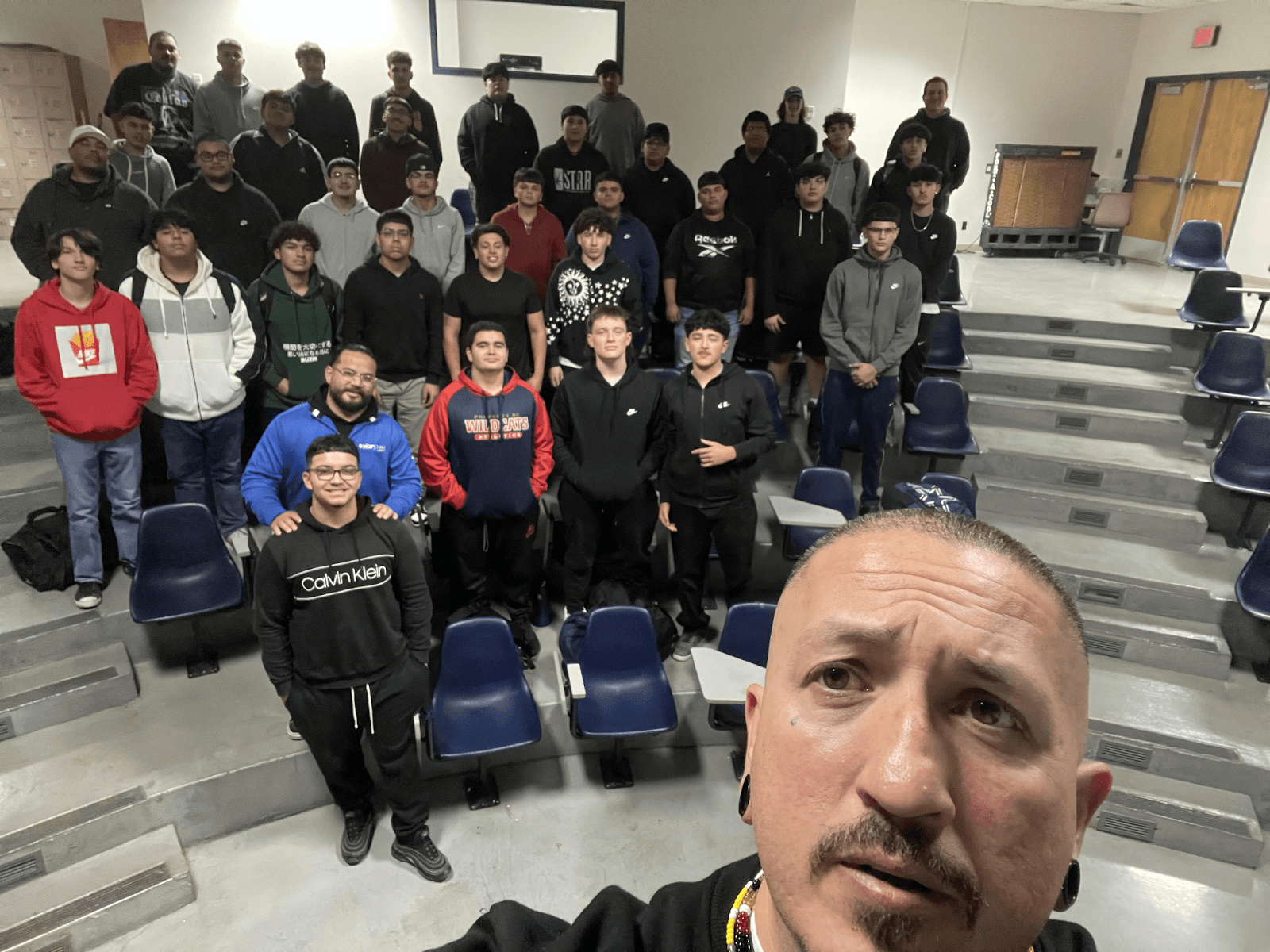
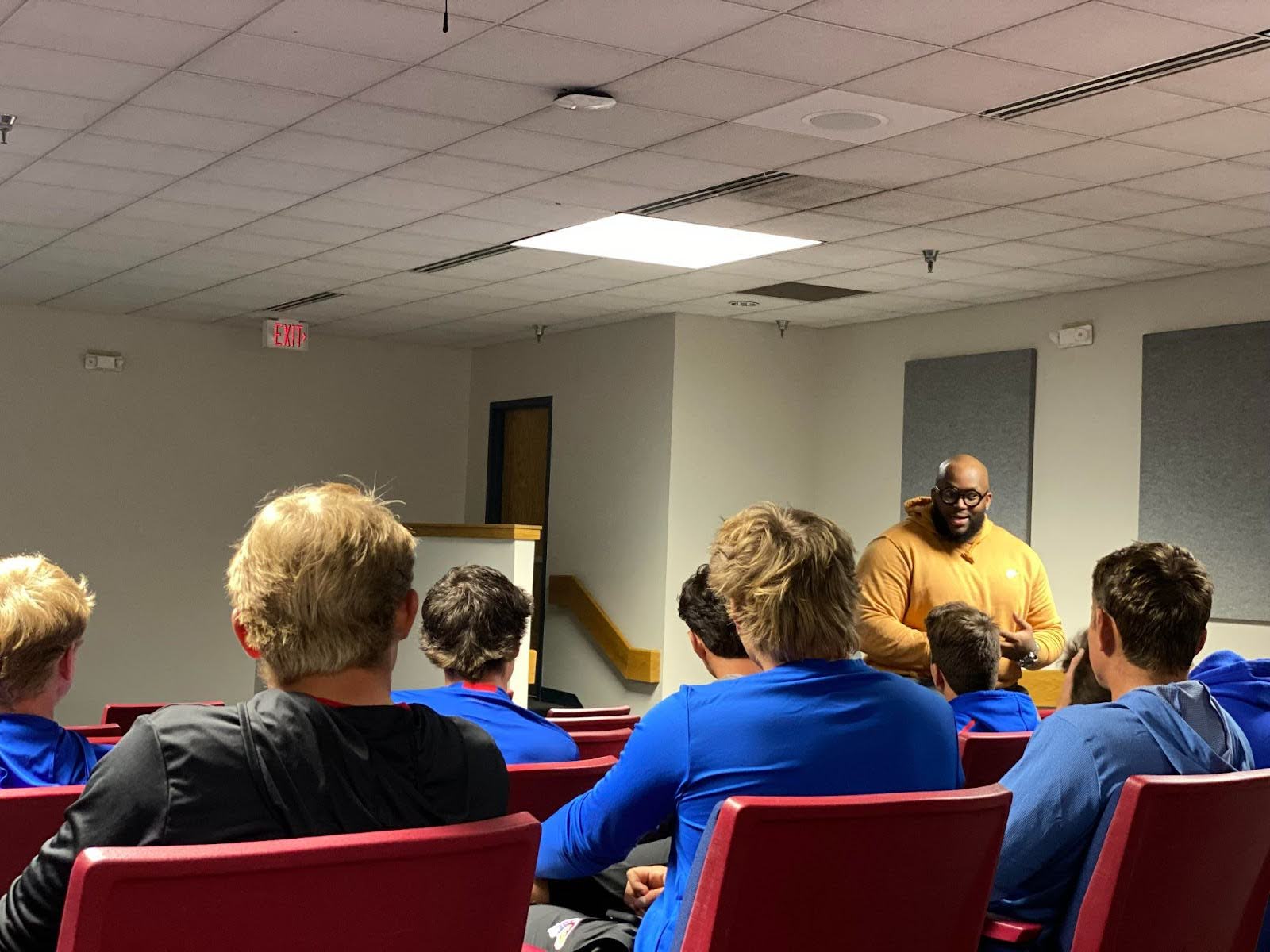
The Healthy Manhood Initiatives department carries out the mission and vision of A Call to Men through direct engagement with organizations, systems, and gatherings where men and boys are present. From virtual training with family and community centers to in-person training with collegiate athletic teams, our HMI team meets men where they are, extending invitations to build highways between their heads and hearts and promote healthy manhood to end violence against women, girls, and folx further marginalized at the intersections of identity and social membership.
This year inspired our team to elevate our genuine curiosity about the challenges facing boys and men while emphasizing our roles as learners and educators. Across the year, we created internal learning sessions and approached each engagement as an opportunity to develop new offerings and resources to promote healthy manhood. From male loneliness to the Manosphere, the men of the HMI department established new pathways and focal points for our work with adult men. Additionally, this team facilitated the official closing of A Call to Men’s Healthy Masculinity Project, a three-year nationwide initiative that engaged communities through our Live Respect Curriculum.
One of the most beautiful and rewarding aspects of our work is the opportunity to walk alongside men in their journey of healthy manhood. At the end of a keynote session in February delivered by one of our team members at a regional conference, a line of men formed to connect. Surprisingly, out of about 15 men, only one had a question. The other 14 simply wanted to say “thank you for this” and very vulnerably, share their appreciation for the message and the pathway created for them to exhale and feel seen & held. One man, in a prominent position of local government, stumbled over his words, took a deep breath, and was moved to tears while sharing his experience of feeling pressured to perform within his masculinity since childhood.
“Is it okay to ask for a hug?” he questioned. It was a welcome and warm embrace.
We love these moments, as they give us hope to carry on and continue doing what we know is needed to fulfill our mission and vision.
Trainings and Engagements
71
Folks Reached
3656
Boys and Men Reached
2610
Our HMI Successes
In partnership with Hope and Healing Survivors’ Resource Center, we facilitated multiple opportunities for engagement in Akron, OH. Over a two-day training, we untangled the epidemic of male loneliness as a pathway to discussing men’s mental health with over 25 community members across industries and professions. We explored the impacts of pornography, how local laws were changing, and pondered how to support youth more meaningfully in their sex education. In defining healthy manhood, we ventured into the vastness of online spaces to examine the obstacles and challenges that may impede our progress here.
The success of this training rested on the shoulders of the multigenerational makeup of the attendees. Boomers, Gen X-ers, Millennials, and Gen Z were all represented and invested in acknowledging the challenges and opportunity gaps across age, stressing the importance of creating spaces solely for adult youth advocates to grapple with concepts and engage in knowledge sharing and discourse. We anticipate more significant occasions to come as we continue our partnership with this community in 2026.
During a conference in Spokane, WA, our team was introduced to members of the Coeur d’Alene Tribe (Idaho) and the STOP Violence Program alongside the Idaho Coalition Against Sexual and Domestic Violence. After connecting to learn more about each other and stay in touch across the year, we were invited to participate in an inaugural event titled “CARRYING THE FIRE: A GATHERING FOR BOYS AND NATIVE MEN.” Hosted on the territories of the Coeur d’Alene Tribe in northern Idaho, Native boys and men came into a space of reflection, healing, and commitment to:
Reclaim traditional teachings.
Disrupt cycles of harm.
Deepen their personal responsibility of protecting, nurturing, and leading their community.
A Call to Men led two sessions with 32 men in attendance; the first emphasizing the impact of patriarchy, colonial ideas of masculinity & gender, and how each disrupts traditional roles within Indigenous communities. After this session, an older man expressed feeling inspired to do this work with the men of his Tribe. A younger man shared that he was teased and ridiculed as a child for asking for help and for asking too many questions. As a result, he grew up believing that asking questions was something that girls did and that it was an annoying trait. His love for learning in school and during traditional hunts left him curious, and he wanted to know everything, but he hesitated to ask his questions.
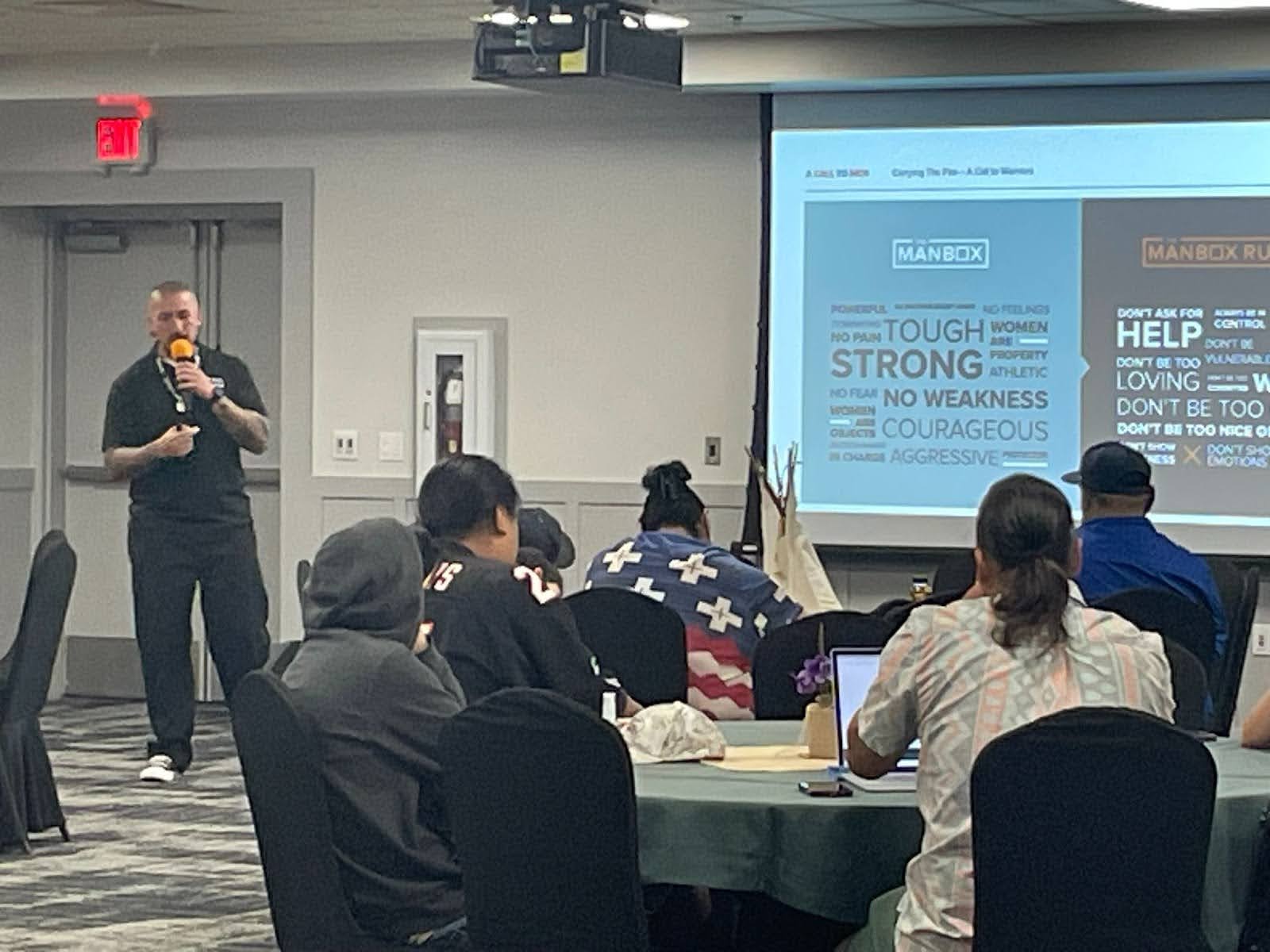
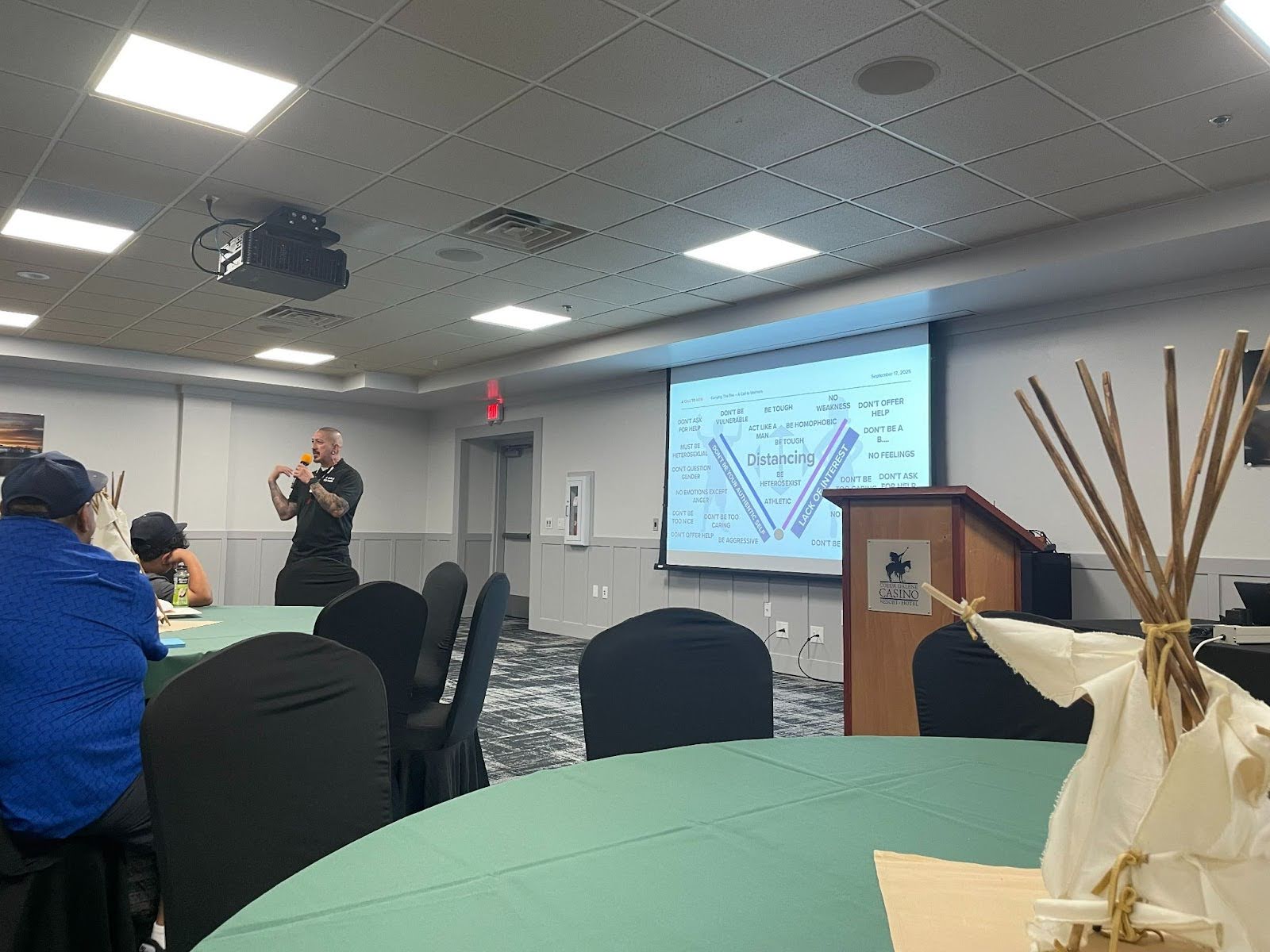
text
At that point in his life, he was carrying a lot of pain and holding so much in. One day, a teacher commented that he looked like he needed a hug. He accepted the invitation, and when she hugged him, he began to cry. That was the first time he remembered crying. That moment became his turning point as he then sought to learn how to trust, be vulnerable, and begin his healing process. This young man greatly valued his experience in this session with A Call to Men.
The second was a talking circle format that facilitated critical dialogue around understanding privilege to move towards aspiring allyship. We discussed the 12 keys to practicing healthy manhood. The men were asked to select one or two key practices, share which ones resonated with them the most, and explain how they would put them into practice. The vulnerability, intimacy, and testimonies shared in the circle moved several men deeply, prompting emotional responses through tears, vulnerability in sharing, and outward displays of love. We acknowledged the space we created as a healing practice and made the connection that our crying was a form of purification.
It was a true delight and a gift to work with relatives committed to promoting the practice of healthy manhood while introducing the philosophy and principles of A Call To Men, interpreted through an Indigenous lens.
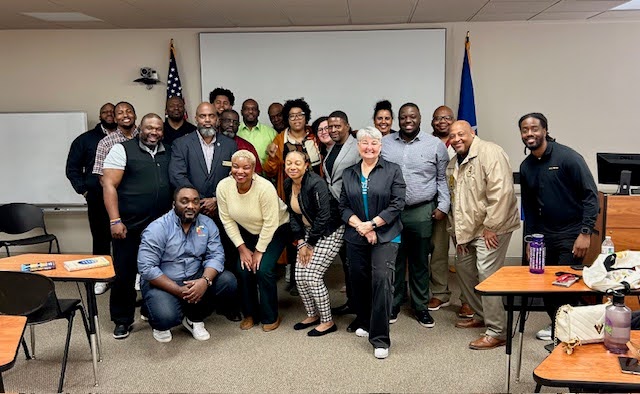
“Understanding IPV and Approaches for Engaging People Who Cause Harm” in partnership with the South Carolina Coalition Against Domestic Violence and Sexual Assault and the Center for Fathers and Families
Columbia, SC
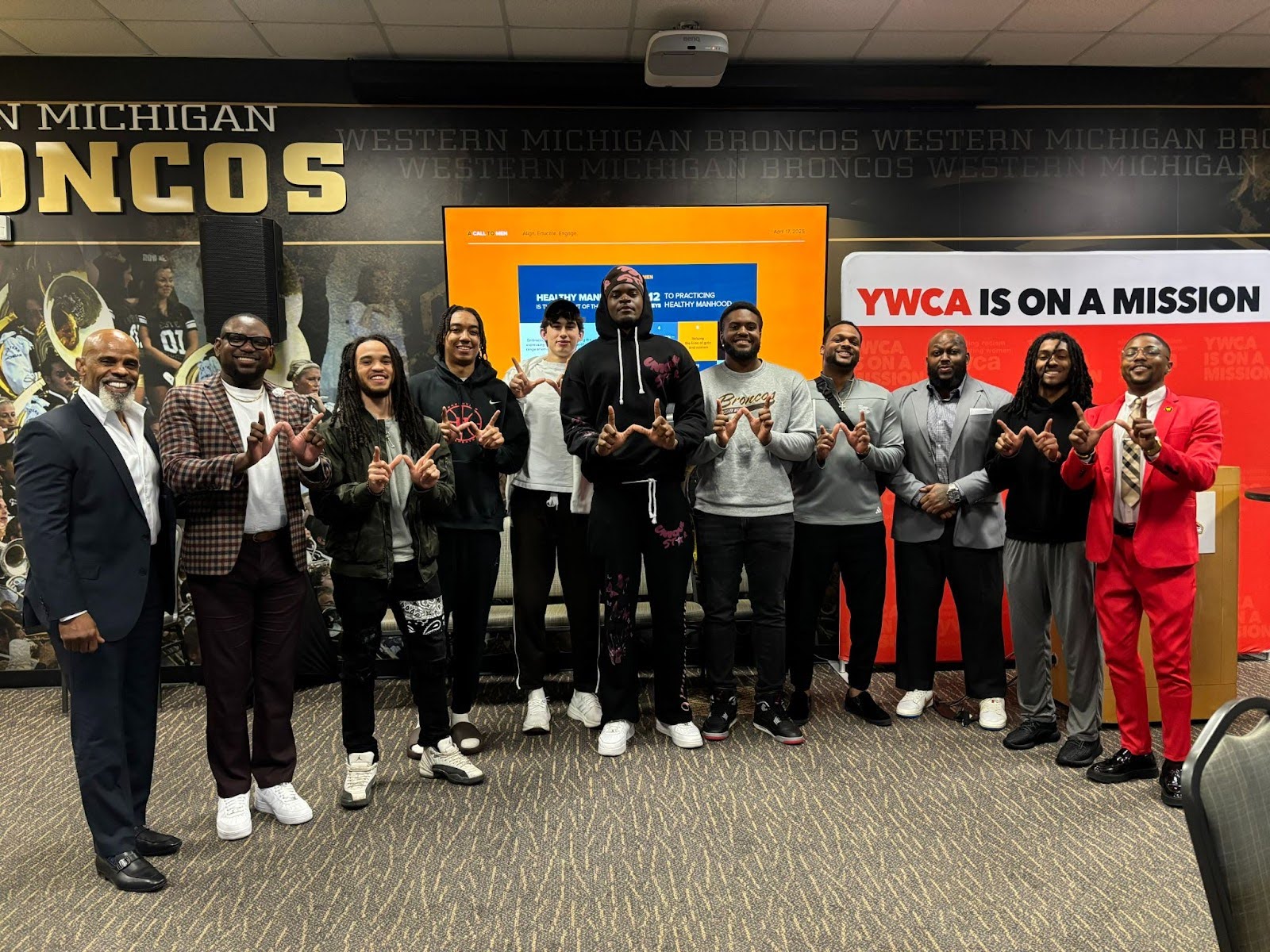
“Young Men in Conversation” event hosted by YWCA Kalamazoo and Western Michigan University
Kalamazoo, MI
A Call to Men has collaborated with the U.S. military for over 14 years, providing training at numerous domestic and international military installations. Our work with service members and service providers has deepened their awareness and understanding of domestic violence and sexual assault while providing resources to help them take an active role in violence prevention.
The team provided both virtual and in-person training at Air Force and Army installations domestically and abroad in 2025.
This year, our time consisted of exploring the prevalence of domestic violence and sexual assault within our culture. Participants learned:
The impact of domestic violence and sexual assault on victims, families, perpetrators, and communities.
Strategies to build and maintain healthy relationships.
The role that all service members and leaders can play in domestic and sexual violence prevention, and strategies to create safer communities.
The influence and platform that the military has in our society to contribute to domestic violence and sexual assault prevention efforts.
OUR HMI CULTIVATIONS AND PARTNERSHIPS
Align. Educate. Engage. The YWCA of Kalamazoo remains committed to ending racism and empowering women, with 140 years of demonstrated dedication. For three consecutive years, their incredible staff and community leaders have invited A Call to Men into their community to support their annual events focused on men’s engagement. The 6th Annual Men’s Breakfast brought together over 100 men from the community, representing diverse professions and backgrounds, and shared a dedication to modeling congruence with the YWCA's mission. A Call to Men was honored to return, support, and share our message of practicing and promoting healthy manhood. We are eager to continue partnering and exploring opportunities to expand our reach and impact, further elevating and emphasizing these efforts in the year ahead.
Later that same day on the campus of Western Michigan University, our co-founder and Chief Development Officer, Mr. Ted Bunch, and our VP for Healthy Manhood Initiatives, RahK Lash, co-facilitated a meaningful dialogue with a group of student leaders (male athletes and fraternity men). No PowerPoint slides. No podiums or microphones. In a circle, informal setting, Ted and RahK nurtured a space conducive to vulnerability, storytelling, and curiosity, allowing these young men to guide and steer the direction of the time.
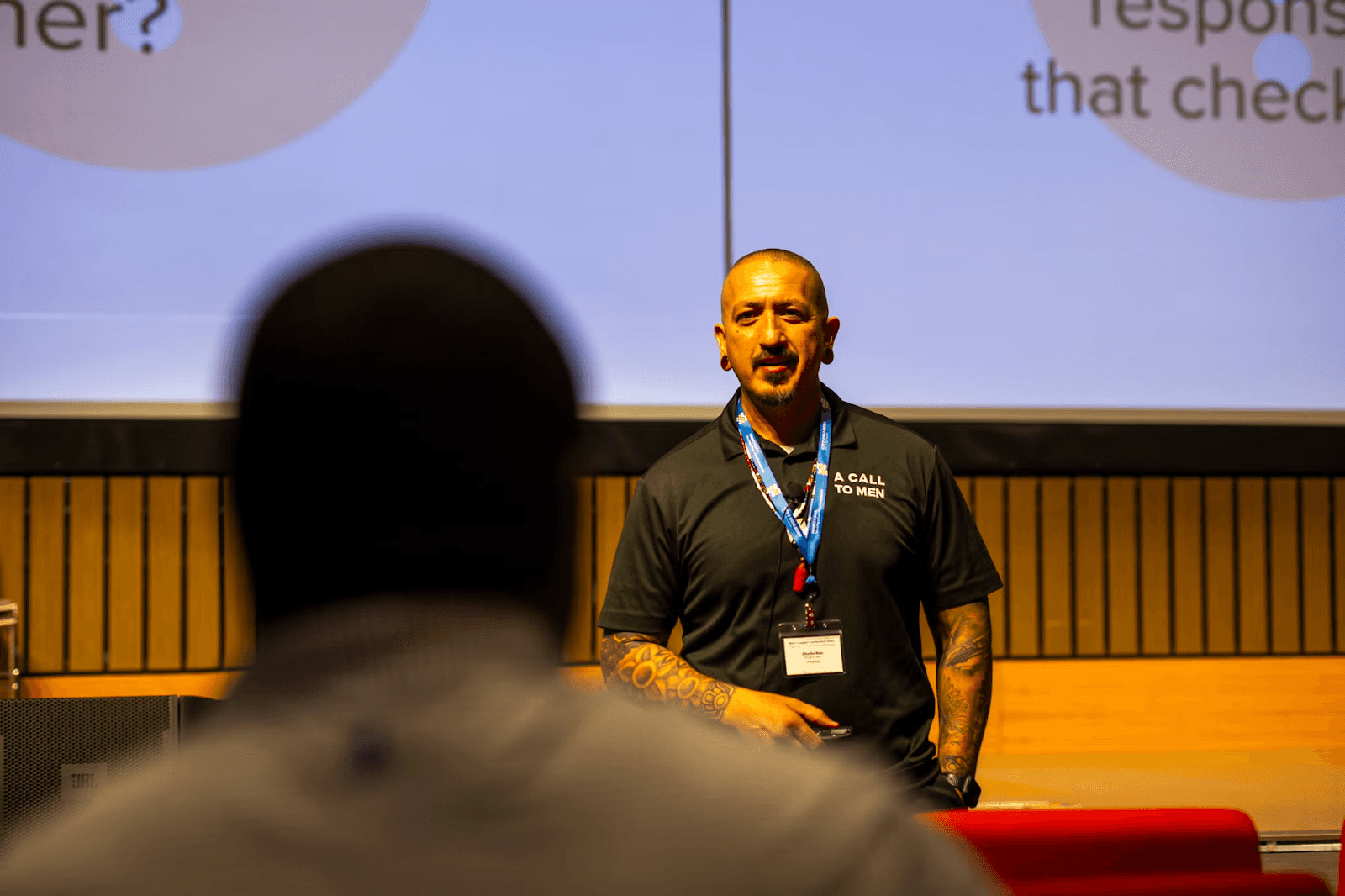
Inaugural Men’s Impact Conference hosted by City Colleges of Chicago (Project S.A.F.E),Chicago, IL
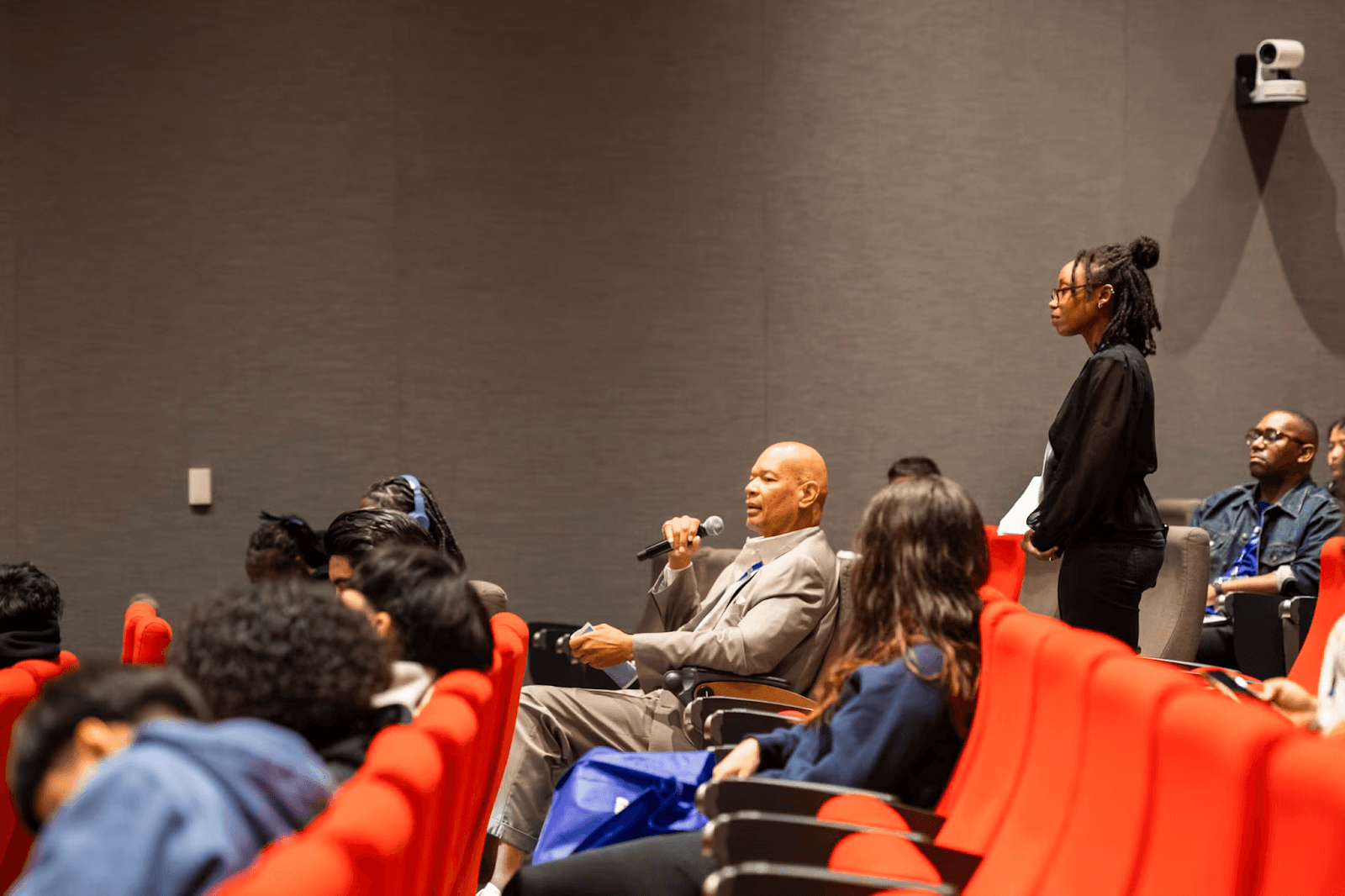
In 2024, A Call to Men’s Locker Room Talk film screening tour allowed us to partner with new friends at the South Carolina Coalition Against Domestic Violence and Sexual Assault (SCCADVASA). Their outstanding team of advocates introduced our work to organizations across the state. In March, we partnered to deliver a one-day session for 25 leaders through the South Carolina Center for Fathers and Families, with a central focus on healthy manhood, the Man Box, intimate partner violence, mental health, and considerations for youth engagement. It was a joyous moment of solidarity when we all reunited at the 2025 National Sexual Assault Conference, held in California.
Through our partnership with SCCADVASA, we were introduced to the Cumbee Center (Aiken), and A Call to Men will lead a three-part series, including intentional engagement during Teen Dating Violence Month (February) and Sexual Assault Awareness Month (April) 2026.
From providing two workshops in the inaugural Men’s Impact Conference, organized by the City Colleges of Chicago, to formal introductions with Zonta International, the Healthy Manhood Initiatives team remains ready to stay connected and in community with familiar and new partners in 2026.
OUR ADDITIONAL HIGHLIGHTS/NOTES
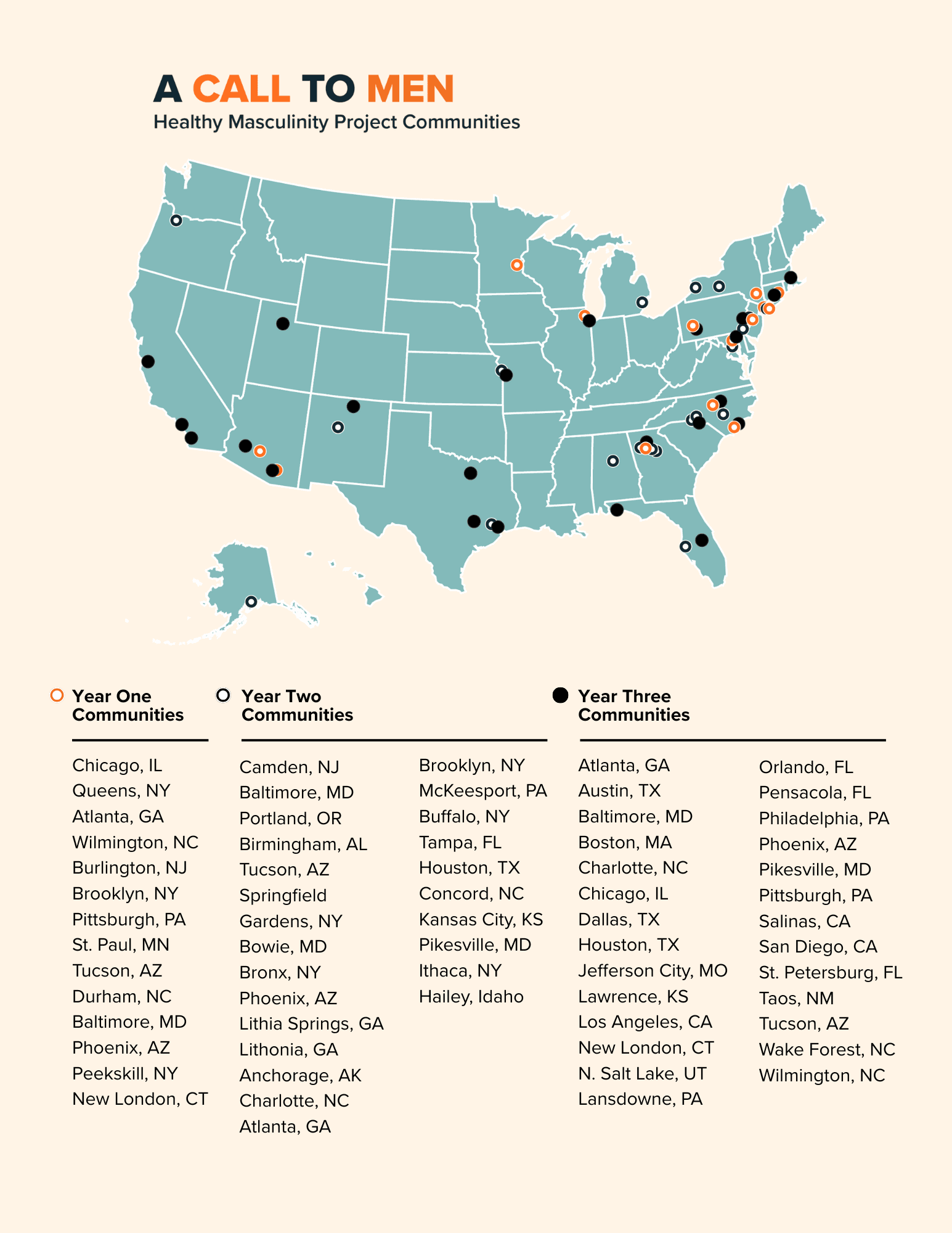
The Healthy Masculinity Project: In April 2025, A Call to Men concluded the three-year Healthy Masculinity Project, which engaged over 108 programs and communities across the country, each implementing A Call to Men’s Live Respect and Healthy Masculinity Curriculum: Life Skills and Well-Being for Boys and Young Men.
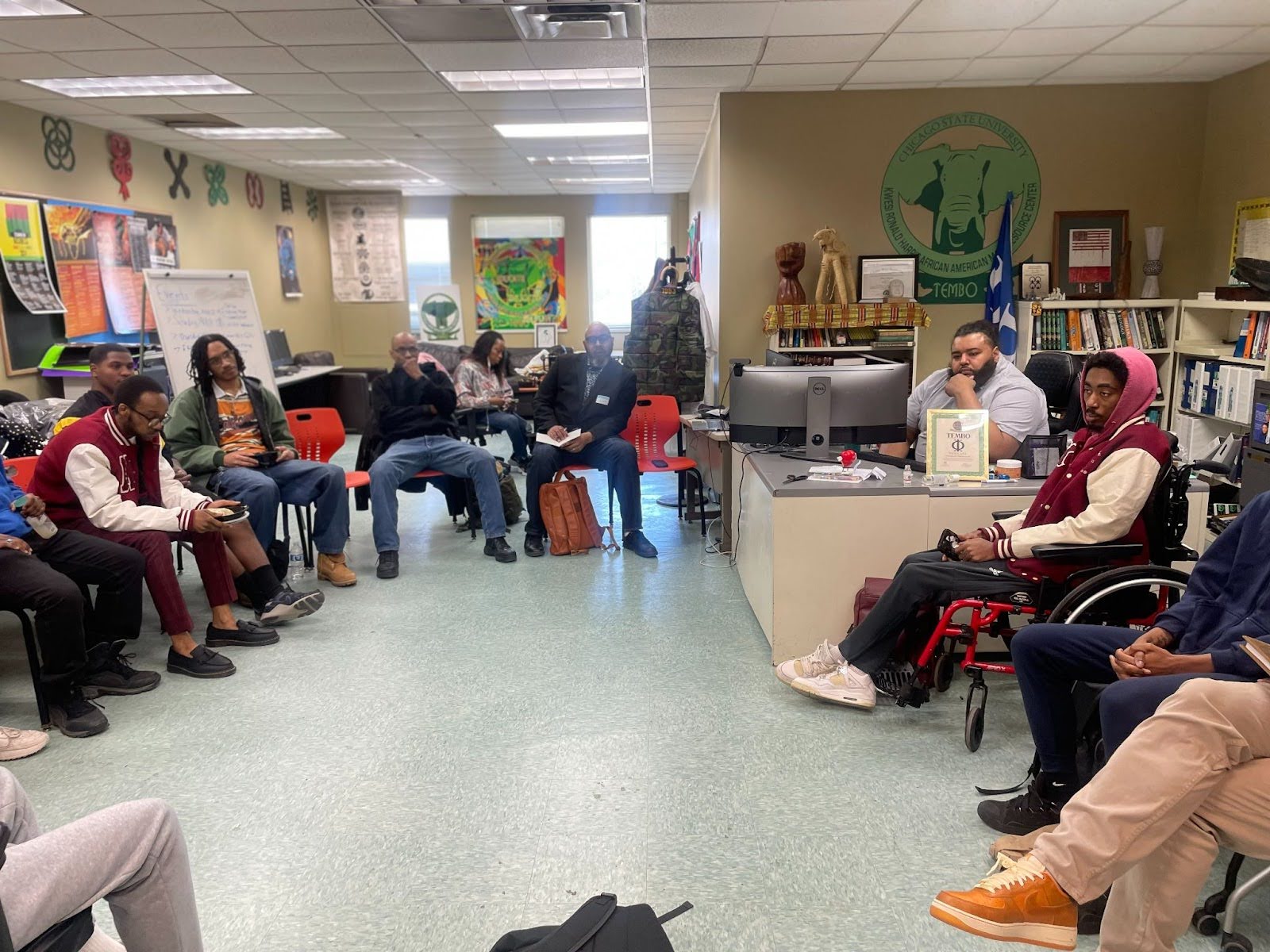
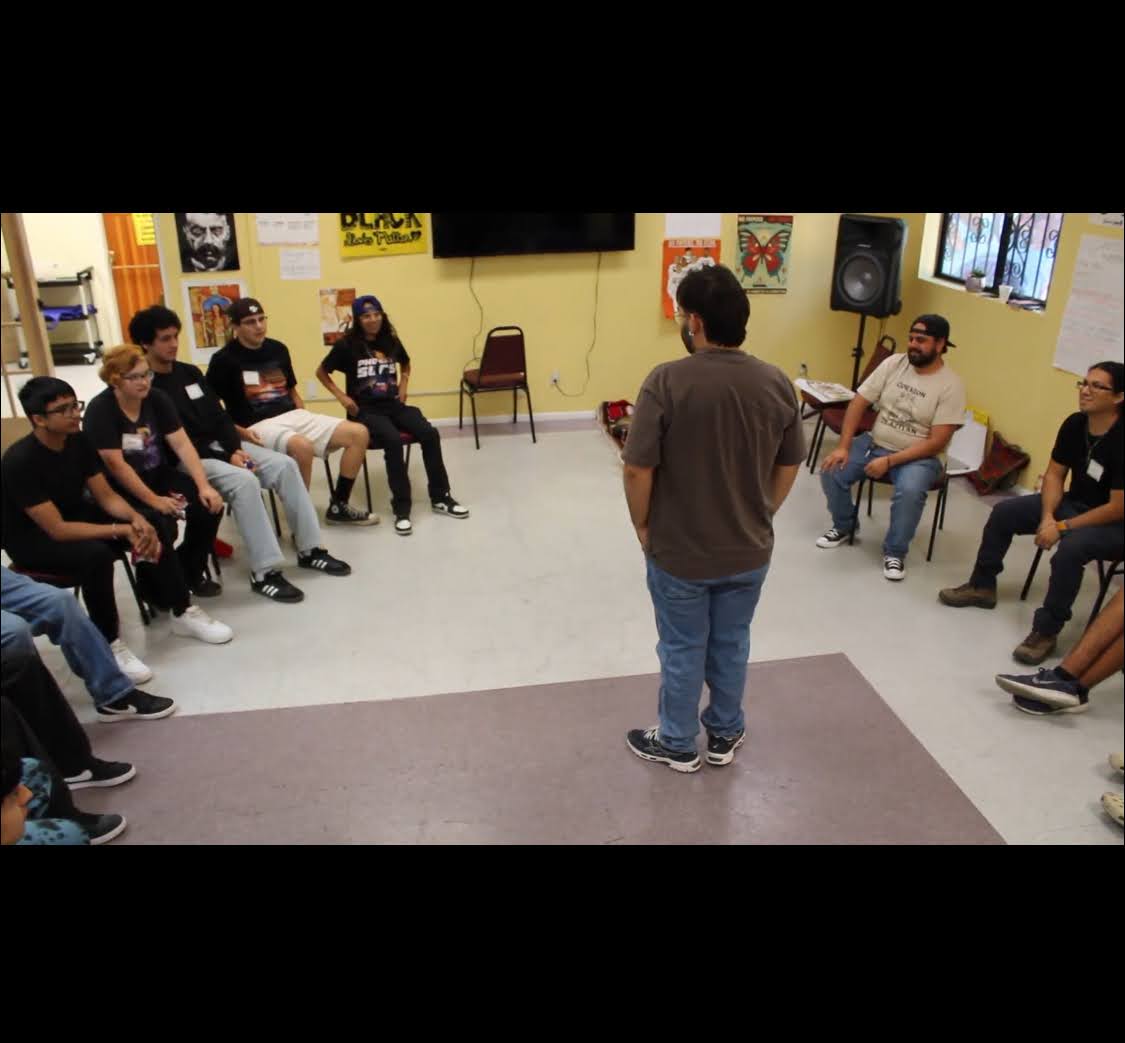
(Hip-Hop Detoxx, Chicago, IL)
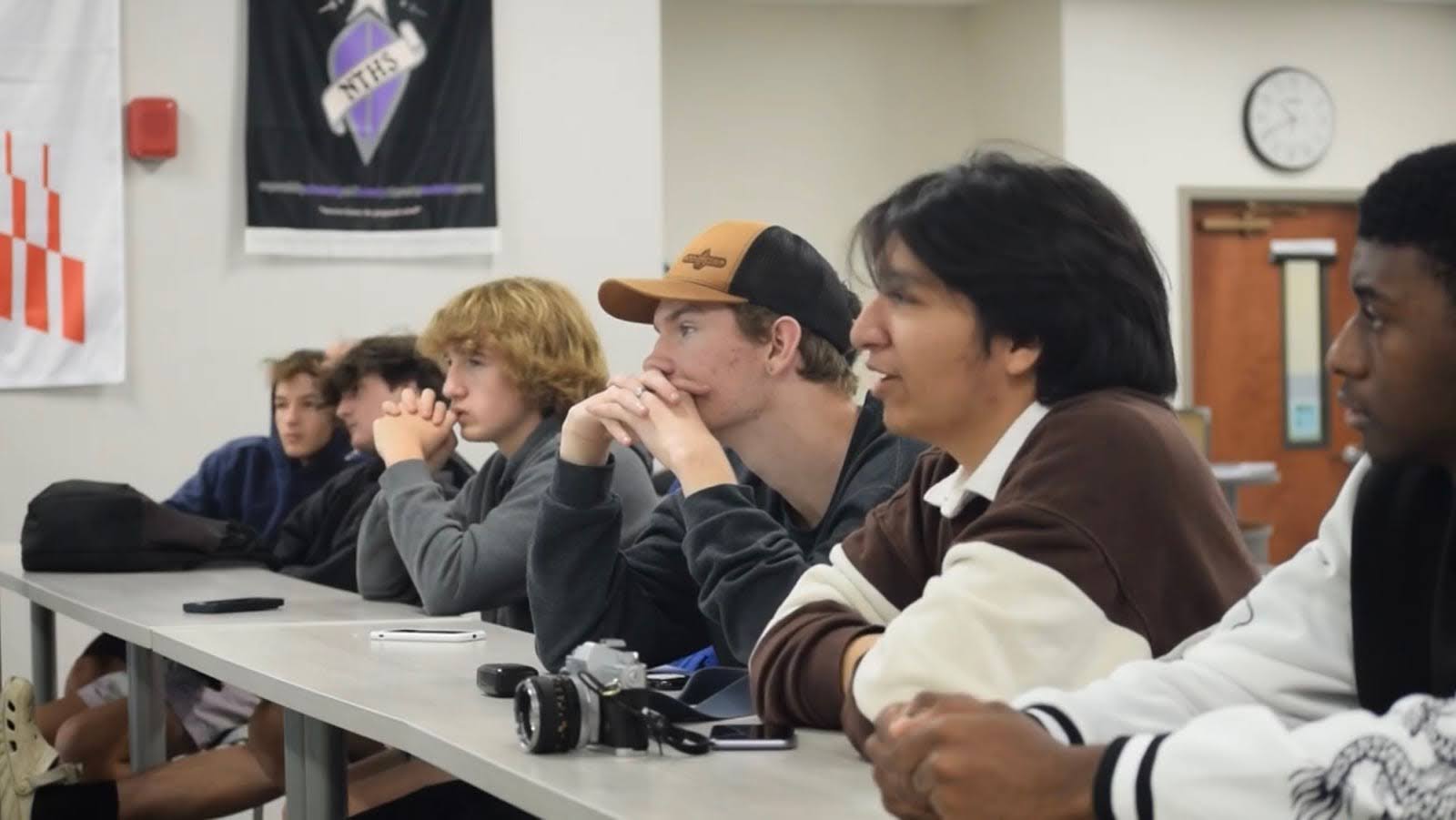
(Community in Schools, Cape Fear, NC)
Through this program, we work with male-identified youth, nationwide, to promote healthy, respectful masculinity; decrease language and actions that degrade women, girls, and those who reside in the margins of the margins; challenge harmful cultural and societal norms; and reduce instances of bullying and homophobia. Initially developed in 2015 by A Call to Men in partnership with Scholastic, we have expanded our curriculum to include three additional lessons on power and privilege, recognizing that this work is ever-evolving and that young boys and men are being exposed to more information at younger ages.
The ultimate goal of this program is to help boys and young men develop:
Emotional literacy
Self-awareness and self-confidence
Strong, resilient interpersonal skills
Healthy relationships with other students
Confidence to ask for support when needed
Healthy masculinity and gender equity leadership skills
Here’s what some of the boys had to say after completing the curriculum:
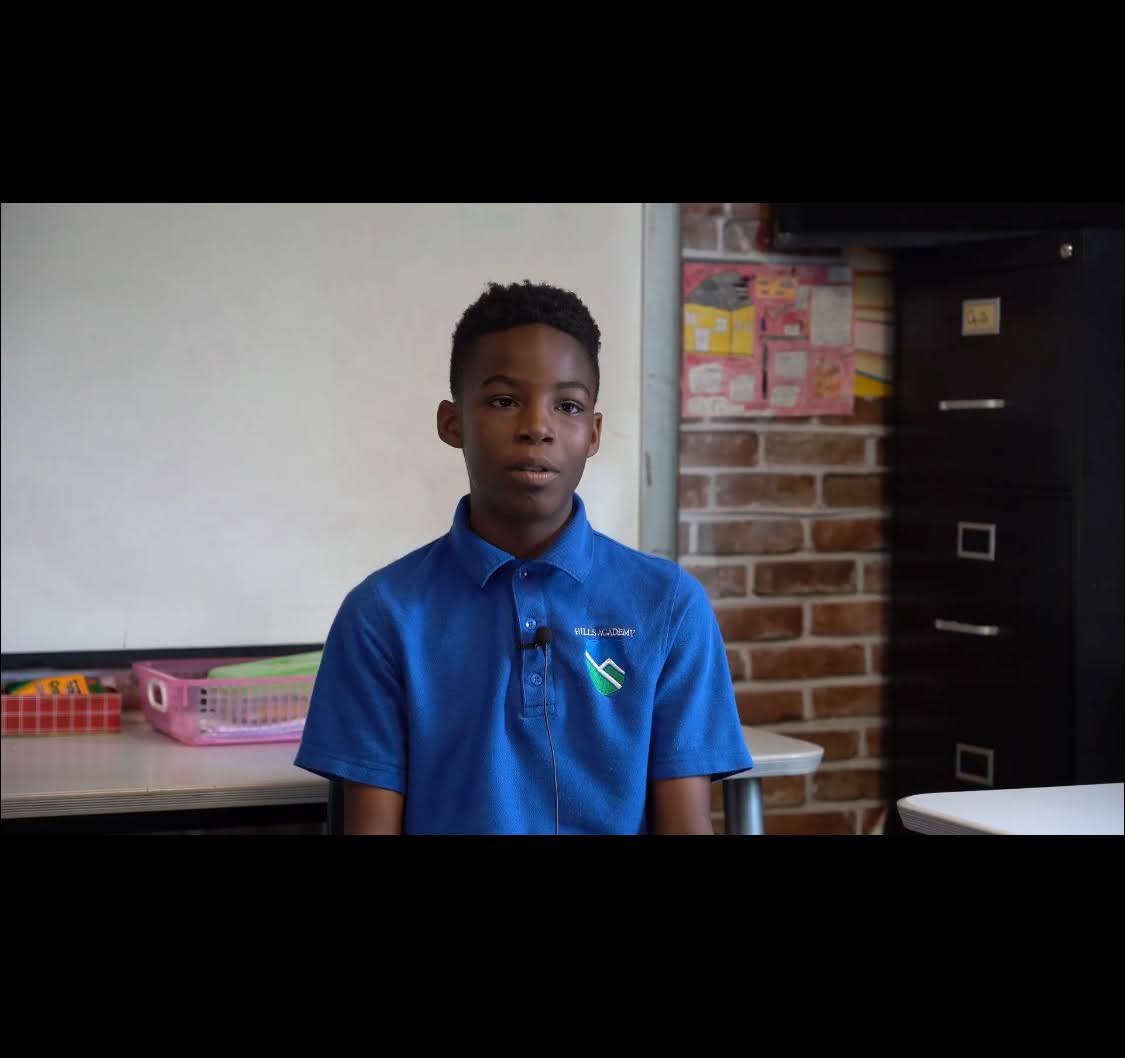
“The live respect program is a great way to get through to your true self.”
“The most impactful lesson learned was that my words can cause a chain reaction, which can result in harmful things like others harming themselves.”
“It’s made me think to myself, ‘Am I the best person for myself, my team, my community, my family, and most importantly, myself?”
“Always treat everyone around you, no matter the gender, with respect.”
“The most impactful lesson I learned from the Live Respect program was that when you have respect in a relationship, it makes life easier.”
Reported having shared lessons and learning from the Live Respect Curriculum with friends and peers.
70%
Said they shared lessons and learning from the Live Respect Curriculum with their families.
66%
Additionally, through our Breaking Out of the Man Box training, we engaged over 2,300 adults, whom we call “Youth Advocates,” emphasizing the importance of family, parents, guardians, caretakers, and the community in coaching life skills for youth wellness.
Cities
65
Programs
92
Youth Participants
2473
Youth Advocates Trained (adults)
2539
Curriculum Lessons
12
Live Respect Facilitators
365
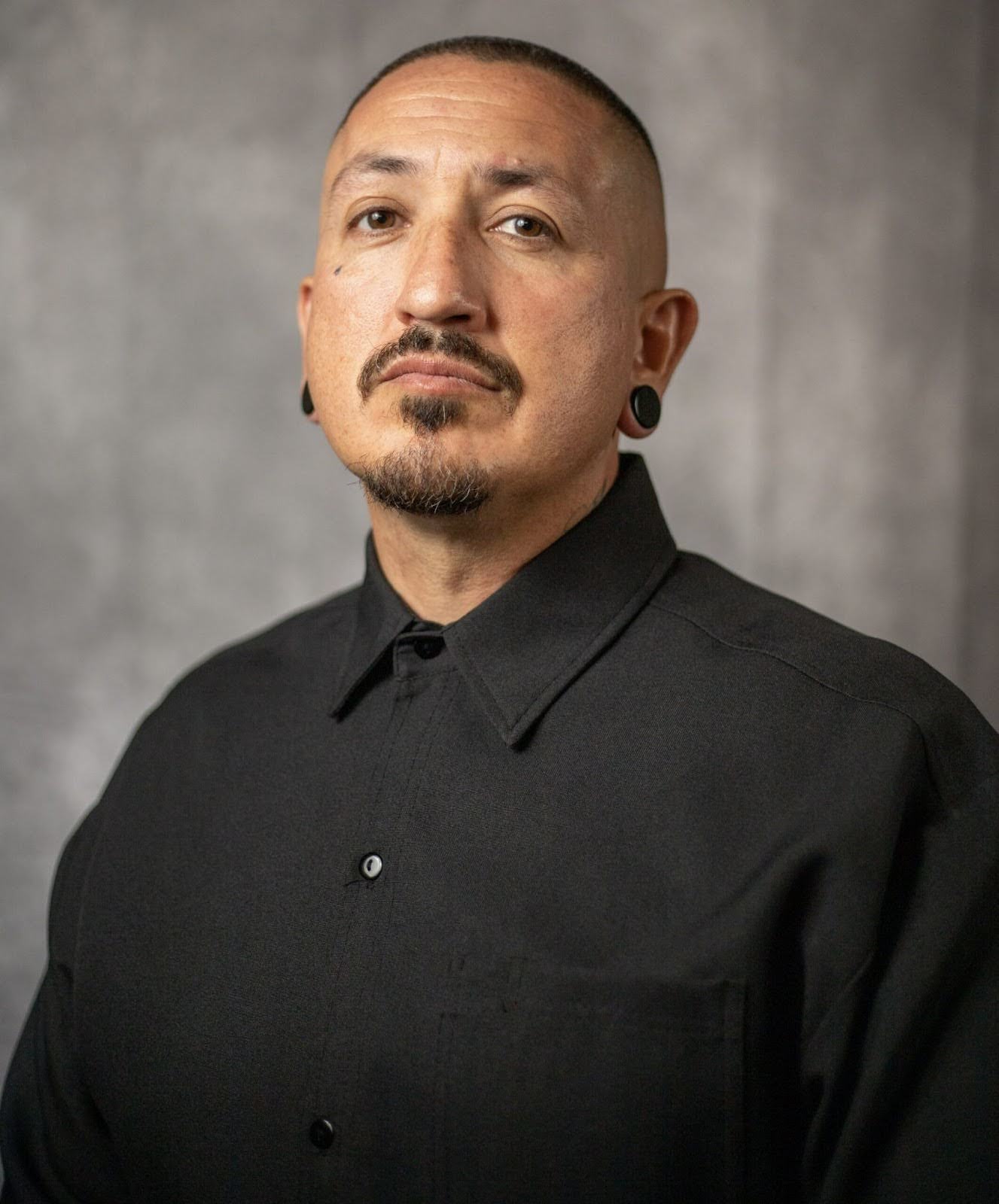
Arizona-based organizations comprised almost 20% of our total programs engaged over the entirety of the HMP, making it the most consistent region in both participation and impact, reaching 354 boys and 492 youth advocates across the state. Having one of our Healthy Manhood Initiatives Coordinators, Chucho Ruiz, residing locally provided many benefits. It afforded potential partners a chance to connect in person, elevated the credibility of the curriculum, and boosted the morale of partners.
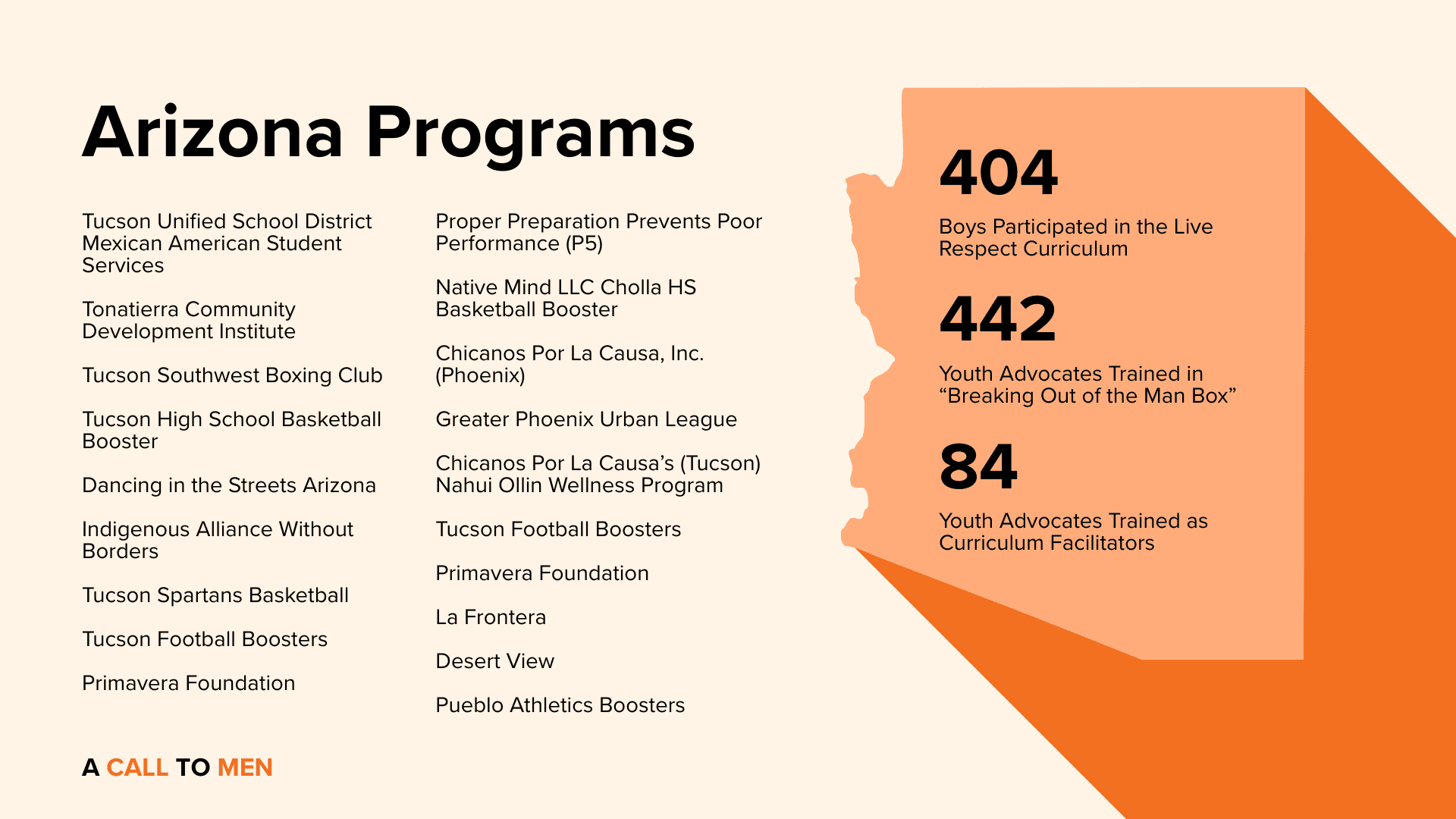
In 2022, the Mexican American Student Services Department at the Tucson Unified School District (TUSD) accepted the invitation to join the HMP in the first cycle. The TUSD is the third-largest district in Arizona, and three schools implemented our Curriculum. As a result, adjacent organizations, like the Athletic Booster Club from a new school, contacted A Call to Men to express their interest in the Project for the second grant cycle.
One day in history class at a high school within this district, the topic of colonization and sexual violence towards Indigenous women was being discussed. A young man, known to his peers as a quiet and reserved member of the football team, raised his hand. To the surprise of many of the other boys, this player expressed feelings of unfairness when considering women having to seek protection from men while acknowledging it’s often men who perpetuate harm towards them.
The entire class reached a collective silence of surprise and attention. His social membership as a football player already afforded him a platform. Many were in awe that he used it to offer thoughts and insights aloud about men’s role in ending violence.
When asked by his peers how he arrived at these notions, the football player simply stated, “Some guy in the community has been spending time with the team talking about a Man Box and healthy masculinity and stuff.”
The son of our Coordinator for Healthy Manhood Initiatives, Chucho Ruiz, was also in this class. He exclaimed proudly, “Hey, that guy is my dad!”
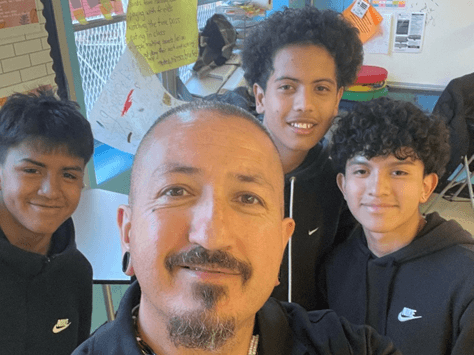
MS217, Queens, NY
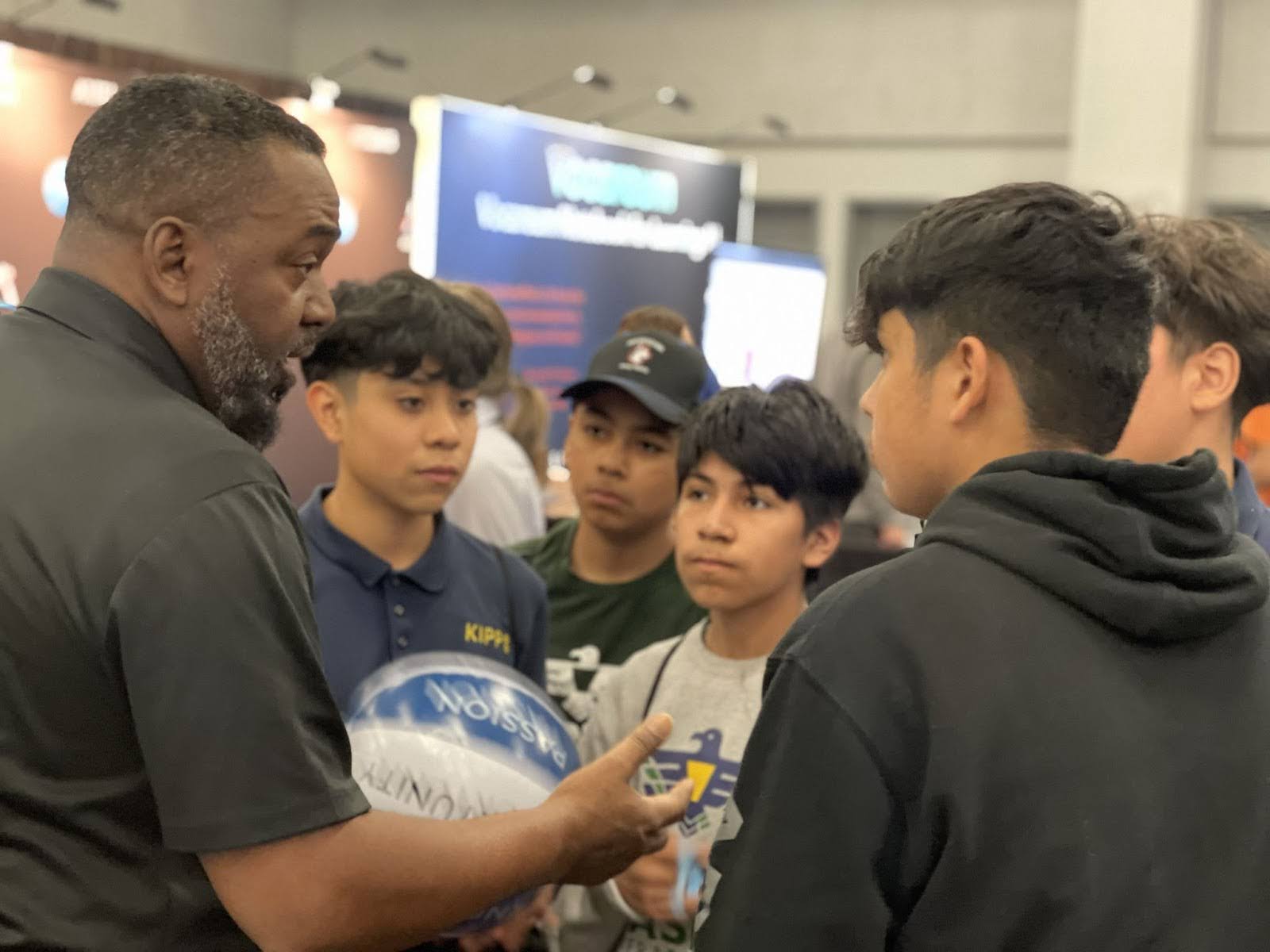
SXSW EDU, Austin, TX